23950 Franz Road Suite 700, Katy, TX , 77493


What Makes Angel Aligner Different From Invisalign for Patients at Smiles-On Orthodontics?


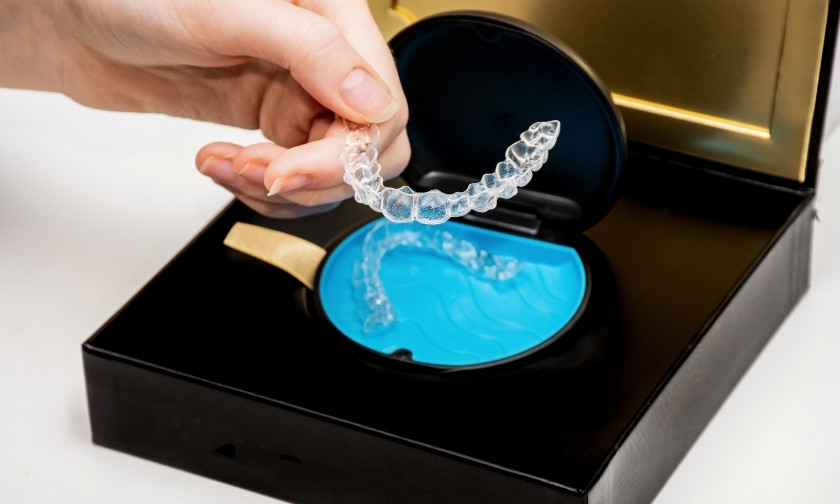
Clear aligner therapy has come a long way from its earliest iterations. What was once a single dominant product category has evolved into a field with multiple competing systems, each with its own material science, treatment philosophy, and clinical approach. Most patients walking into an orthodontic office have heard of Invisalign. Far fewer have heard of Angel Aligner — and that information gap means many people end up choosing a system based on brand recognition rather than which one actually fits their situation better.
That’s worth correcting. The differences between these two systems are real, clinically meaningful, and relevant to how your treatment unfolds. Here’s what you should know before assuming one is simply the upgraded version of the other.
The Material Difference: TPEE vs. PETG
The most fundamental difference between Angel Aligner and Invisalign lies in the material used to fabricate the trays. Invisalign uses SmartTrack, a proprietary multi-layer thermoplastic elastomer developed and patented by Align Technology. SmartTrack is well-regarded for its elasticity and consistent force delivery.
Angel Aligner uses a thermoplastic polyether ester elastomer — commonly abbreviated as TPEE — which offers a distinct combination of properties. TPEE-based aligners maintain their elastic properties across a wider temperature range, which has practical significance: human mouth temperature fluctuates with hot and cold beverages, and materials that retain their mechanical properties more consistently under those fluctuations deliver more predictable force profiles throughout the wear cycle.
Published biomechanical comparisons have noted that Angel Aligner’s material resists deformation under thermal stress more effectively than certain competing thermoplastics. What this means in clinical terms is that the forces the tray is designed to deliver remain more stable from the first hour of wear to the final hour before the next tray change.
Case Customization: How the Treatment Plans Differ
Staging and Refinement Philosophy
Both Invisalign and Angel Aligner use digital treatment planning software to map out tooth movements across a series of aligners. Where they differ is in how that planning is structured and how refinements are handled mid-treatment.
Angel Aligner’s planning platform uses proprietary AI-assisted staging that has been trained on an extensive dataset of completed cases. The staging algorithms are particularly well-optimized for Asian dental anatomy but perform well across diverse case types due to the breadth of clinical data that informs them. For orthodontists who are comfortable working within the system, it offers granular control over tooth movement sequencing.
Refinements and additional tray sets are a standard part of any aligner system when teeth don’t track exactly as predicted. The terms of how refinements are handled and how many are included within a treatment agreement can vary between providers and systems. This is worth clarifying upfront with your orthodontist, regardless of which system you choose.
Attachment Design and Placement
Both systems use tooth-colored attachments — small composite bumps bonded to teeth — to improve aligner grip and enable more complex tooth movements. The design and placement logic for these attachments differ between the systems and can affect how discrete the overall treatment looks during the active phase. Angel Aligner’s attachment system has been specifically engineered to minimize visibility while maintaining the mechanical leverage needed for precise movement, a balance that is more difficult to achieve than it sounds.
How Smiles-On Orthodontics Determines Which System Fits You
At Smiles-On Orthodontics in Katy, the decision between Angel Aligner and other clear aligner systems isn’t made based on which product the office happens to carry — it’s made based on a thorough clinical evaluation of your specific case. Your orthodontist reviews the extent and type of correction needed, your bite classification, the condition of your teeth and gums, your lifestyle, and your treatment timeline before making any recommendation.
For some patients, Invisalign is the more appropriate system based on their clinical situation or existing records in Align’s database. For others, Angel Aligner’s material properties, staging approach, or cost structure make it the stronger fit. The evaluation is the starting point — not the name on the box.
One System Isn’t Always Better — Yours Might Be
The honest takeaway from this comparison is that neither Angel Aligner nor Invisalign is universally superior. Each has genuine strengths, and the system that will work best for you depends on your tooth positions, bite, bone structure, and the orthodontist’s command of the platform. What matters more than the brand name on the tray is the quality of the treatment plan inside it — and the experience of the provider who designed it.
Book your consultation at Smiles-On Orthodontics in Katy today. Come ready to discuss what you want to change, your timeline, and any questions you have about the available systems.
People Also Ask
Is Angel Aligner FDA-cleared for use in the United States?
Yes. Angel Aligner received FDA clearance for marketing and use in the United States. FDA clearance for a medical device indicates that the agency reviewed the product and found it substantially equivalent to a legally marketed predicate device in terms of safety and effectiveness. This is the same regulatory pathway used by most cleared orthodontic aligner systems in the U.S. market.
Can Angel Aligner treat complex cases, or only mild misalignment?
Angel Aligner is designed to treat a broad spectrum of cases, ranging from mild crowding and spacing to moderate bite corrections, including overbite, underbite, and crossbite. Whether a specific case — particularly a more complex one — is best suited to clear aligner therapy at all is a clinical determination your orthodontist makes based on the required movement. Some cases are better served by traditional braces regardless of which aligner brand is under consideration.
Does Angel Aligner cost more or less than Invisalign?
Treatment cost for any clear aligner system is determined by case complexity, treatment duration, the number of aligners required, and your provider’s fee structure — not simply by which brand is used. Because Angel Aligner operates with a different cost structure than Align Technology, it can, in some cases, offer a more favorable price point for equivalent treatment, but this varies significantly. Your orthodontist at Smiles-On Orthodontics will provide a detailed fee estimate following your evaluation.
How do I clean Angel Aligner trays, and is the process different from other aligners?
The cleaning protocol for Angel Aligner trays is consistent with general clear aligner hygiene recommendations: rinse with lukewarm water when you remove them, clean with a soft toothbrush and a small amount of clear, unscented soap, and store them in their case when not in use. Avoid hot water, which can warp the thermoplastic. Avoid toothpaste with abrasive particles, which can scratch the surface and make the trays more visually apparent. Official Angel Aligner cleaning solutions are also available and recommended for deeper cleaning.
What happens if my teeth don’t track as expected during Angel Aligner treatment?
Mid-course correction is a standard part of any aligner treatment, regardless of brand. If your teeth aren’t responding as the digital plan projected, your orthodontist will assess the discrepancy during a progress check and determine whether refinements — additional trays designed around your current actual tooth positions — are needed. This is not a failure of the system; it reflects the biological reality that teeth move at variable rates depending on bone density, bite forces, and wear compliance. Staying consistent with your wear schedule is the most effective way to keep your treatment on track.